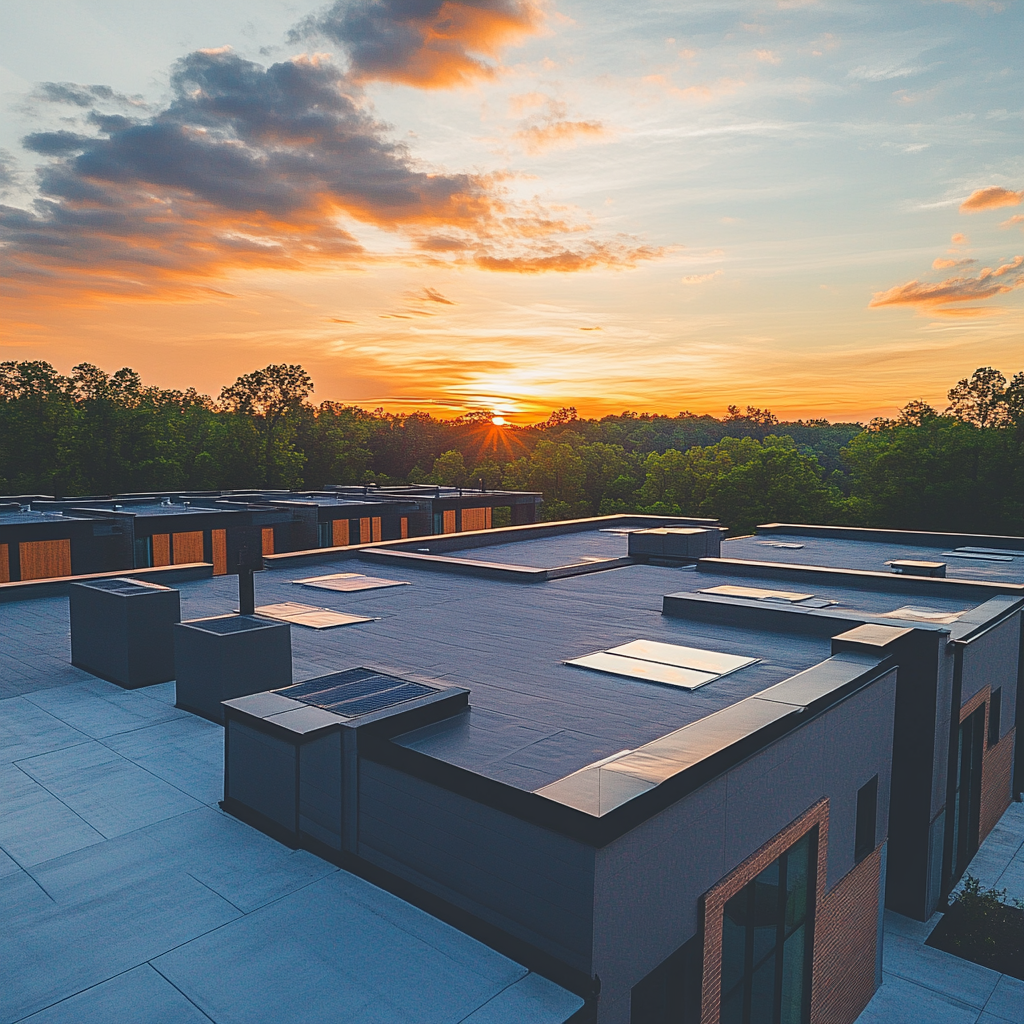
Flat roofs are popular across Raleigh for commercial buildings, multi-family properties, and even modern residential homes. They offer a clean architectural look, easier access for maintenance, and space for HVAC units, solar arrays, or rooftop patios. But flat roofs come with a challenge that pitched roofs rarely face: ponding water.
If you’ve ever walked across a flat roof after heavy rain and noticed standing water that lingers for 24 to 48 hours, you’ve seen ponding water firsthand. Many property owners brush it off as normal—after all, the roof is flat. But ponding water is one of the most common causes of premature flat-roof failure, structural deterioration, and expensive repairs.
This guide explores why ponding water happens, what it does to your roof, and the professional solutions roofing experts use to diagnose and fix the issue for good.
What Exactly Is Ponding Water?
Ponding water is any standing water that remains on a roof for more than 48 hours after rainfall or snowmelt, according to most roof manufacturers and industry standards such as the National Roofing Contractors Association (NRCA).
Despite the name, flat roofs aren’t actually flat—they are supposed to have a slight pitch, usually about ¼ inch per foot, to encourage water to drain toward gutters or internal drains. When that pitch doesn’t function correctly, water collects in low spots rather than flowing off the roof.
Why Ponding Water Happens on Flat Roofs
Flat roofs are more sensitive to structural shifts and installation errors than pitched roofs. Here are the most common causes roofing professionals find during inspections:
1. Natural Roof Settling Over Time
Every building settles. Soil shifts, wood and steel framing adjusts to humidity and temperature changes, and over time roof decking can slightly dip.
These dips—called deflection—often create shallow “bowls” on the surface where water naturally collects. Even a low spot just ¼ inch deep can create noticeable ponding.
Older commercial buildings in Raleigh, especially those in areas like Midtown, Warehouse District, and North Hills, often experience this due to age and long-term load stress.
2. Poor Drainage Design or Clogged Drains
Flat roofs rely heavily on drainage systems such as:
- Internal drains
- Scuppers
- Gutters
- Tapered insulation directing water toward exits
When these systems are undersized or clogged with leaves, grit, or debris, water has nowhere to go.
A clogged internal drain can cause water to spread across a large area, increasing the weight load on the roof—up to 5 pounds per square foot per inch of water.
3. Improper Installation or Bad Pitch
One of the top causes of chronic ponding is improper slope during installation.
If the contractor did not:
- Use tapered insulation correctly
- Verify drainage angles
- Account for HVAC equipment placement
- Follow the required pitch
…standing water becomes inevitable.
This is most common on budget installations, or “quick-fix” commercial roof replacements where cost was prioritized over long-term performance.
4. Structural Issues or Added Rooftop Equipment
Any time new equipment is added—such as HVAC units, vents, skylights, or solar systems—the weight distribution of the roof changes.
If the structure wasn’t designed to support the new load, the roof deck can bow downward in certain spots. Rooftop foot traffic can cause localized indentations as well, especially on older EPDM or built-up roofs.
5. Damaged or Compressed Insulation
Wet insulation loses its structural integrity. If a roof has experienced previous leaks, wind uplift, or poor repairs, insulation can become wet, compressed, or deteriorated, causing low areas that trap water.
Why Ponding Water Is a Serious Problem
Standing water is never just an aesthetic issue. The longer it remains, the greater the damage.
1. Accelerated Roof Membrane Breakdown
Water sitting on UV-exposed roofing materials acts like a magnifying glass. Over time, ponding:
- Breaks down surface granules
- Weakens membrane seams
- Causes blistering and cracking
- Shortens the lifespan of modified bitumen, EPDM, and TPO
Manufacturers often void warranties if ponding water is present.
2. Structural Damage
Water is heavy. One square foot of water one inch deep weighs about 5 pounds.
If large ponding areas develop, the roof may be holding thousands of pounds of extra weight. This can lead to:
- Deck sagging
- Joist stress
- Interior cracking
- Even partial structural collapse in extreme cases
3. Increased Likelihood of Leaks
Ponding water seeks gaps—no matter how small.
As seams weaken and the membrane ages, standing water eventually finds a pathway inside. These leaks are harder to trace because water often travels far from the source before entering the building.
4. Plant and Algae Growth
Where water rests, life grows. Persistent ponding leads to:
- Algae
- Mold
- Small vegetation
- Insect breeding
These penetrate roofing membranes and degrade them even faster.
How Professional Roofers Fix Ponding Water
A flat roof with ponding isn’t doomed—but it does require a professional diagnosis. The fix depends on the root cause.
Here are the solutions roofing contractors in Raleigh commonly use:
1. Improve Roof Slope with Tapered Insulation Systems
This is one of the most effective, long-term fixes.
Tapered insulation is installed beneath the roofing membrane to create subtle angles that channel water toward drains or edges. It removes low spots and restores proper flow without requiring a full structural rebuild.
Tapered systems work well for:
- Commercial buildings
- Multi-family complexes
- Rehab/re-roof projects
- Older roofs without built-in slope
2. Add or Enhance Drainage
If drainage is insufficient, professionals may recommend:
- Installing additional drains
- Enlarging scuppers
- Adding overflow drains
- Reworking gutter systems
- Replacing clogged internal drains
Proper drainage is essential—no amount of regrading solves the issue if water has nowhere to exit.
3. Level Out Low Spots with Roof Crickets
Crickets are small ridge-shaped structures installed to divert water away from areas that commonly hold it. They’re essential around:
- Chimneys
- HVAC units
- Skylights
- Parapet walls
Commercial buildings often require crickets in multiple areas to ensure water flows correctly.
4. Repair or Replace Damaged Membranes
If aging membranes have allowed water infiltration, professionals will:
- Remove affected sections
- Replace wet insulation
- Install new reinforced membrane layers
- Seal vulnerable seams
For older roofs nearing the end of their lifespan, a full replacement may be the most economical solution.
5. Apply Premium Coatings—But Only After Fixing the Cause
Roof coatings—such as silicone, acrylic, or polyurethane—are sometimes marketed as solutions to ponding water. This is not accurate.
A coating can prevent UV damage and increase waterproofing, but only after:
- Drainage issues
- Pitch issues
- Low spots
…have been fixed.
Otherwise, the coating just traps water longer.
When Is Ponding Water a Red Flag for Replacement?
Not every roof can be corrected with isolated repairs. Replacement becomes necessary when:
- The structure is severely deflected
- Insulation is extensively saturated
- Membrane seams have failed repeatedly
- The roof is past its 20–30 year lifespan
- Drainage cannot be improved without major reconstruction
In these cases, a completely redesigned flat roofing system pays for itself through performance and reduced maintenance.
How Routine Maintenance Prevents Ponding Water
Professional roofers recommend inspections twice a year—typically in spring and fall—as well as after major storms.
Maintenance tasks that prevent ponding include:
- Clearing drains and gutters
- Removing debris from the roof surface
- Checking for membrane blisters or punctures
- Inspecting flashing around equipment
- Verifying drainage flow
Catching a low spot early prevents thousands of dollars of structural or interior damage.
Final Thoughts: Ponding Water Isn’t Normal—But It Is Fixable
Flat roofs don’t have to be headaches. Ponding water is a sign that something isn’t functioning the way it should—but with the right inspection and repair approach, the issue can be corrected permanently.
For Raleigh property owners—especially those with older commercial buildings or modern residential designs—addressing ponding water early protects:
- Your roof’s lifespan
- Your building’s structure
- Your energy efficiency
- Your long-term maintenance costs