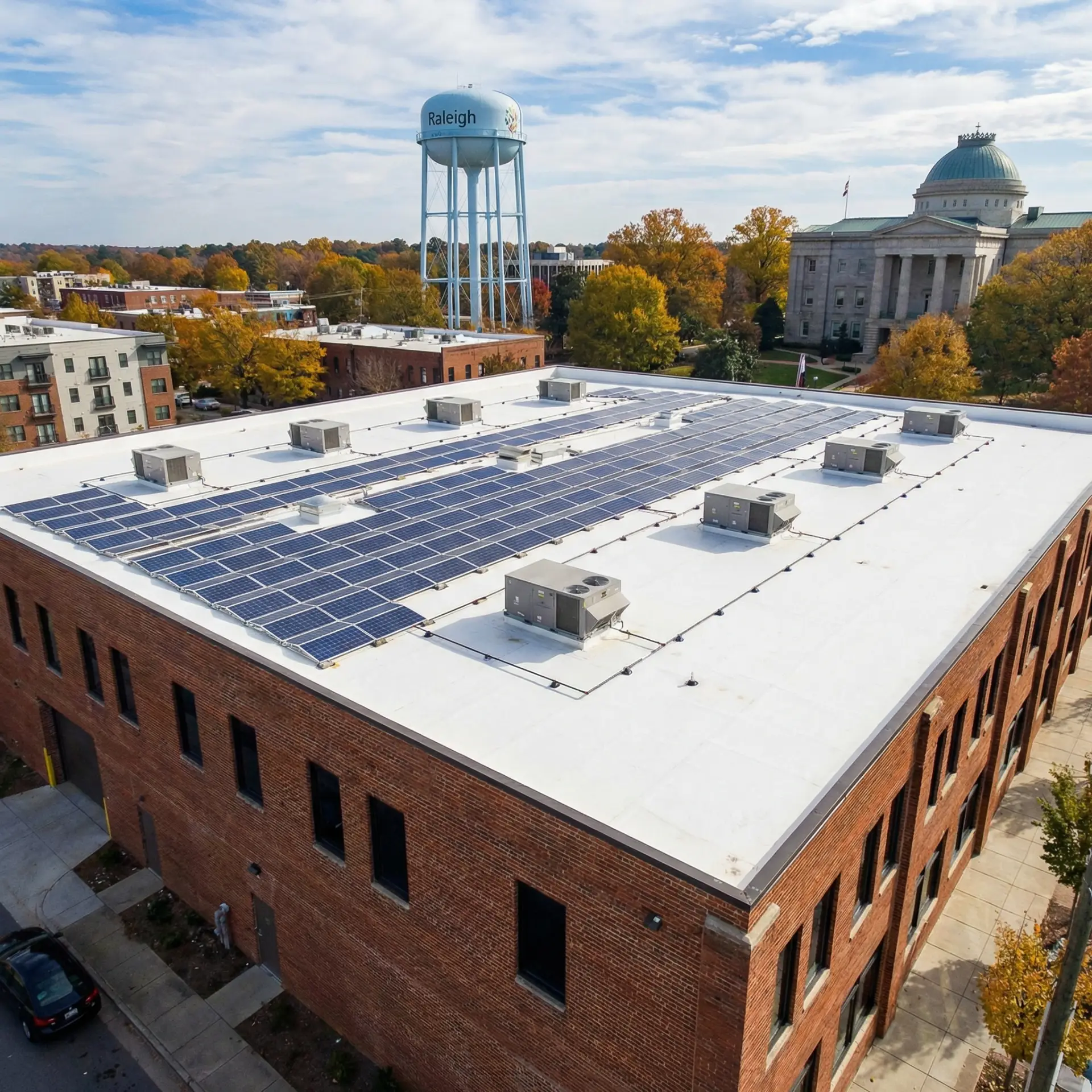
Replacing a commercial roof is a major decision for any business owner or property manager. Unlike residential roofs, commercial roofing systems protect large structures, house expensive equipment, and often support multiple tenants or business operations underneath.
Because of this, commercial roof replacement requires careful planning. Budgeting, inspections, and timing all play critical roles in ensuring the project goes smoothly and delivers long-term value.
At Raleigh Roofer, we work with business owners and commercial property managers across Raleigh, Cary, Durham, Apex, and the surrounding Triangle communities. One thing we’ve learned is that the most successful commercial roofing projects are the ones that begin with good information and a clear plan.
If you’re considering replacing a commercial roof, here are the most important things to understand before starting the process.
Start With a Professional Roof Inspection
The first step before replacing any commercial roof is determining whether replacement is actually necessary.
Many commercial roofing systems can last decades when properly maintained. Sometimes what appears to be a failing roof may only require targeted repairs.
That’s why Raleigh Roofer always begins with a detailed roof inspection. A professional inspection evaluates:
- Membrane condition
- Seam integrity
- Drainage performance
- Flashing and penetrations
- Roof decking condition
- Moisture trapped beneath the surface
Commercial roofs often develop hidden problems that are difficult to detect without experience. Water can travel underneath membrane systems for long distances before appearing inside the building.
Our inspection process helps business owners understand the true condition of their roof before committing to a major project.
Understanding the Lifespan of Commercial Roofing Systems
Commercial roofs come in many different systems, including:
- TPO membrane roofs
- EPDM rubber roofs
- PVC roofing systems
- Modified bitumen roofs
- Built-up roofing systems
Each system has a different expected lifespan depending on maintenance, installation quality, and environmental exposure.
In the Triangle region, many commercial roofs last between 20 and 30 years when properly maintained. However, drainage issues, seam failures, and repeated repairs can shorten that lifespan.
If you want a deeper understanding of how long commercial roofs typically last, our article on commercial roof lifespan explains the factors that influence durability.
Knowing the remaining life of your roof helps determine whether replacement is necessary now or whether repairs could extend the system further.
Budgeting for a Commercial Roof Replacement
Commercial roof replacement is not a small expense, and budgeting for the project requires more than simply calculating the square footage of the roof.
Several factors influence the total cost of a commercial roofing project:
Roof Size and Layout
Larger buildings require more materials and labor, but complexity also plays a role. Roofs with multiple penetrations, HVAC units, or unusual shapes take longer to install properly.
Drainage and Structural Conditions
If drainage improvements are needed or insulation layers must be replaced, those factors will affect project cost.
Material Selection
Different roofing membranes come with different price points and durability levels. Choosing the right material depends on your building’s needs, expected lifespan goals, and maintenance strategy.
Decking and Structural Repairs
In some cases, sections of roof decking may need replacement if long-term moisture damage has occurred.
These variables are why accurate inspections and detailed proposals are so important before budgeting for a project.
Planning the Right Timing for Replacement
Timing plays a huge role in commercial roofing projects.
Business owners should consider several factors when deciding when to replace a roof.
Weather Conditions
Raleigh’s climate includes hot summers, heavy rainstorms, and occasional winter ice events. Roofing projects are typically easier to manage during moderate weather periods when crews can work efficiently.
Business Operations
Commercial roof replacements can generate noise and activity around the building. Planning around business hours or slower operational periods may minimize disruption.
Tenant Considerations
For multi-tenant properties, it’s important to communicate the project schedule clearly so occupants know what to expect.
Raleigh Roofer works closely with property owners to schedule roofing projects in ways that reduce operational impact.
Understanding How Commercial Roof Replacement Works
Many business owners are familiar with residential roofing, but commercial roof replacement follows a different process.
Commercial roofs are often installed as layered systems. Replacement may involve:
- Removing the existing membrane
- Evaluating insulation layers
- Repairing decking where necessary
- Installing new moisture barriers
- Applying the new roofing membrane
Depending on the building, some commercial roofs may also qualify for overlay systems where a new membrane is installed over the existing one. However, this approach depends on the structural condition of the current roof.
Our team evaluates these options during the inspection process to determine the most effective approach.
As an experienced Raleigh roofing company, Raleigh Roofer helps business owners understand which replacement method best suits their building.
The Importance of Drainage and Water Management
Water management is one of the most important aspects of commercial roofing.
Flat and low-slope roofs are designed to move water toward drains, scuppers, or gutters. If drainage is poor, water may pond on the roof surface.
Standing water increases stress on roofing membranes and can shorten the lifespan of the system.
During inspections Raleigh Roofer evaluates:
- Drain functionality
- Roof slope
- Ponding areas
- Debris buildup
Improving drainage during a replacement project can significantly extend the life of the new roof.
Why Seam Integrity Matters in Commercial Roofing
For membrane roofing systems such as TPO and EPDM, seams are the most vulnerable part of the roof.
These seams connect sections of roofing material together. If seams begin to separate or weaken, water can infiltrate beneath the membrane.
Our blog on how commercial flat roof seams fail over time explains how seam deterioration can lead to widespread damage.
When replacing a commercial roof, proper seam welding and installation are critical to long-term performance.
Considering Long-Term Maintenance
A commercial roof replacement is not just about solving today’s problem—it’s about protecting your building for decades.
Once the new roof is installed, routine inspections and maintenance help ensure the system performs as expected.
Maintenance programs typically include:
- Annual inspections
- Clearing debris from drains
- Checking membrane seams
- Evaluating flashing around rooftop equipment
These simple steps can extend the life of the roof significantly and prevent expensive repairs.
Insurance and Documentation Considerations
In some cases, commercial roof replacement may involve insurance considerations, particularly if storm damage contributed to the roof’s deterioration.
Proper inspection documentation can help business owners understand whether storm-related damage played a role.
Raleigh Roofer provides detailed documentation and photographic evidence during inspections so property owners have a clear record of the roof’s condition.
This information can be helpful when discussing roofing conditions with insurance providers or financial planners.
Choosing the Right Contractor Matters
Commercial roofing projects require experience, technical knowledge, and careful planning.
Unlike residential roofing, commercial systems involve larger surfaces, specialized materials, and complex drainage systems.
Choosing a contractor with commercial experience helps ensure that installation details—especially seams, flashing, and drainage—are handled correctly.
At Raleigh Roofer, our team works with business owners throughout the Triangle to deliver reliable commercial roofing solutions designed for long-term performance.
Final Thoughts: Planning Ahead Protects Your Investment
Your commercial roof protects far more than the building structure itself. It protects inventory, equipment, tenant spaces, and daily business operations.
Replacing a commercial roof is a significant investment, but when it’s planned properly—with thorough inspections, realistic budgeting, and careful timing—it becomes an opportunity to strengthen the long-term reliability of your property.
If you’re considering a commercial roof replacement or simply want to understand the condition of your current system, Raleigh Roofer can help guide the process.
You can schedule an inspection or speak with our team directly through the Raleigh Roofer contact page.
Taking a proactive approach today helps ensure your commercial property remains protected for years to come.