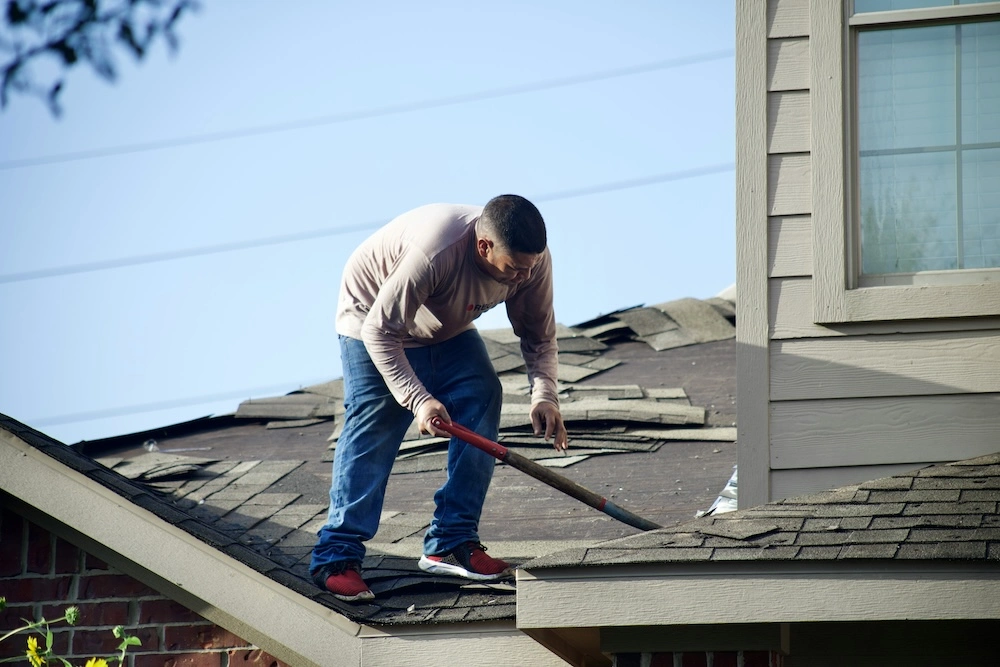
A tree branch falling on your roof can be stressful, especially after a storm. Sometimes the damage is obvious, like broken shingles, a hole in the roof, or a large limb resting across the home. Other times, the branch may look minor from the ground, but it can still loosen shingles, damage flashing, clog gutters, crack roof vents, or create hidden leaks.
For Raleigh homeowners, this is a common concern. Many neighborhoods throughout the Triangle have mature trees, pine branches, heavy canopy coverage, and seasonal storms that can bring strong wind and heavy rain. Even a smaller branch can cause roof problems if it hits the wrong area or scrapes across the shingles.
If a tree branch falls on your roof, the most important thing is to stay safe, document what happened, and have the roof inspected before assuming everything is fine. Here is what to do next.
Stay Safe and Do Not Climb on the Roof
Your first priority should be safety. Do not climb onto the roof to move the branch, check the damage, or take close-up photos. A roof can be slippery after rain, and loose shingles, wet leaves, broken branches, or hidden structural damage can make it even more dangerous.
If the branch is large, heavy, or tangled with other limbs, it may shift unexpectedly. If it fell during a storm, there may also be more branches at risk of falling. Stay away from the immediate area until conditions are safe.
You should also be cautious around power lines. If the branch is touching a power line, near electrical service equipment, or close to the weatherhead where power enters the home, do not touch it. Leave the area and contact the utility company or emergency services as needed.
Even if the branch looks manageable, avoid trying to remove it yourself from the roof. Pulling or dragging a branch can scrape shingles, damage gutters, bend flashing, or make the original problem worse.
Check Inside the Home for Active Leaks
After making sure everyone is safe, check inside the home for signs of water intrusion. Look at ceilings, walls, attic spaces, and rooms directly below the area where the branch landed. Watch for dripping water, damp drywall, fresh ceiling stains, bubbling paint, musty smells, or wet insulation.
If water is actively leaking, place a bucket or towels under the drip and move furniture, electronics, rugs, and valuables out of the way. If water is collecting behind a ceiling and causing a bulge, the area may need urgent attention to prevent further damage.
If you can safely access the attic, look for daylight coming through the roof, wet roof decking, damp insulation, or water trails. Do not step onto exposed ceiling drywall or insulation. Stay on safe framing or avoid the attic if you are unsure.
A leak may not appear right away. Sometimes a branch damages the roof during one storm, but water does not show up inside until the next heavy rain. That is one reason a professional roof inspection is important even if the home seems dry at first.
Document the Damage From the Ground
Before anything is moved or repaired, take photos and videos from a safe location. Capture the branch on the roof, any visible shingle damage, damaged gutters, broken siding, fallen debris, interior water stains, and anything else that may be related.
If there was a storm, take note of the date and approximate time the branch fell or when you first noticed the damage. If neighbors also had storm or tree damage, that context may be helpful.
Do not worry about getting perfect close-up photos from the roof. Ground-level photos are often enough to begin documenting the situation safely. A roofing professional can take closer photos during the inspection if needed.
Documentation can be useful if you decide to contact your insurance company. It can also help your roofing contractor understand what happened before the branch was removed.
Do Not Assume a Small Branch Caused No Damage
A small branch may seem harmless, but roof damage is not always about size alone. The angle of impact, weight of the branch, roof age, shingle condition, and location of the hit all matter.
A branch can scrape away shingle granules, crack shingles, lift tabs, loosen nails, dent soft metal, damage pipe boots, or bend flashing. If the branch lands near a roof valley, chimney, skylight, vent, or edge of the roof, it may affect a more vulnerable part of the system.
Older shingles may be more brittle and more likely to crack or break after impact. Roofs with existing wear may also be less able to absorb damage from falling debris.
From the ground, the roof may look fine. But even hidden damage can allow water to get beneath the shingles later. This is why homeowners should not rely only on a visual check from the yard.
Call a Roofing Professional for an Inspection
Once the immediate safety concerns are under control, contact a roofing professional to inspect the roof. The contractor should check the shingles, flashing, valleys, gutters, vents, pipe boots, roof decking, attic, and any area where the branch made contact.
A proper inspection can help determine whether the damage is cosmetic, repairable, or serious enough to require more extensive work. In some cases, only a few shingles may need to be replaced. In others, the branch may have punctured the roof, damaged decking, or affected a larger section of the roofing system.
A professional roof repair may be enough if the damage is isolated. If the roof is older or has widespread storm-related damage, the contractor may recommend discussing larger repair or replacement options.
The inspection should also include the surrounding area. Branch impact can cause damage beyond the exact spot where the limb landed. For example, a branch may slide down the roof and scrape shingles along the way, or it may pull on gutters as it falls.
Have the Branch Removed Carefully
If the branch is still on the roof, it needs to be removed carefully. Depending on the size and location, this may require a tree service, roofing contractor, or both. A large branch may need to be cut into smaller sections before removal to avoid dragging it across the roof surface.
Dragging a limb down the roof can tear shingles, loosen flashing, scratch protective granules, or damage gutters. The goal is to remove the branch without creating additional roof damage.
If the branch came from a tree that still has broken or hanging limbs, you may also need to contact a tree professional. A roof repair will not solve the bigger problem if another unstable branch is still above the home.
After the branch is removed, the roof should be inspected again if the removal process revealed hidden damage.
Look Closely at Gutters and Downspouts
Tree branches often damage gutters as well as shingles. A branch may dent the gutter, pull it away from the fascia, block water flow, or damage the downspout connection. Even if the roof itself is not badly damaged, the gutter system may need attention.
Gutters are important because they move water away from the roofline and foundation. If a damaged gutter overflows or drains poorly, water can back up near the roof edge, spill onto siding, damage fascia boards, or pool around the home.
After a branch falls, check whether the gutters are sagging, bent, leaking, clogged with leaves, or separated from the home. If the system was already old or struggling, this may be a good time to consider professional gutter installation or repair.
Understand What Insurance May Ask For
If the tree branch caused significant damage, you may decide to contact your homeowners insurance company. Every policy is different, so homeowners should review their coverage and ask their insurer how to proceed.
Insurance may ask for photos, the date of the event, details about the damage, inspection findings, repair estimates, or documentation from a contractor. This is another reason it helps to take photos before cleanup begins.
Avoid making permanent repairs before speaking with your insurer if you plan to file a claim, unless emergency action is needed to prevent further damage. Temporary steps to protect the home, such as tarping a damaged area, may be necessary if water can get in.
A roofing contractor can often provide photos and an assessment of the damage, but the insurance company makes coverage decisions based on the policy and claim process.
Watch for Delayed Leak Signs
Even after the branch is removed, continue watching for signs of moisture. Some roof damage does not cause immediate dripping. Water may enter slowly during later storms, travel along rafters, soak into insulation, or appear as a ceiling stain days or weeks later.
Watch for brown ceiling spots, peeling paint, damp attic insulation, musty odors, or new stains near exterior walls. Pay attention during the next heavy rain. If anything changes, contact a roofing professional quickly.
Delayed leaks can be frustrating because homeowners may think the roof was not damaged at first. A prompt inspection helps reduce that risk by identifying weak spots before the next storm exposes them.
Should You Repair or Replace the Roof?
A fallen tree branch does not always mean you need a new roof. If the damage is limited to a small area and the rest of the roof is in good condition, a targeted repair may be the right solution.
However, if the roof is older, has brittle shingles, widespread granule loss, previous leaks, storm damage, or multiple weak areas, a branch impact may reveal that the roof is already nearing the end of its service life. In that case, a roof replacement may be worth discussing.
The decision should be based on the roof’s overall condition, not just the branch damage. A good contractor should explain what is damaged, what can be repaired, and whether the rest of the roof still has useful life left.
How to Reduce the Risk of Future Tree Damage
You cannot prevent every storm or falling branch, but you can reduce risk with regular maintenance. Trim branches that hang directly over the roof, remove dead limbs, keep gutters clear, and watch for trees that lean toward the home.
After strong storms, walk around the property and look for branches on the roof, shingle debris, gutter damage, or new stains inside the home. Early attention can help prevent small damage from becoming a larger leak.
Homes with mature trees may also benefit from more frequent roof and gutter checks. Tree coverage can be beautiful, but it adds debris, shade, moisture, and impact risk to the roofing system.
Final Thoughts
If a tree branch falls on your roof, do not climb up to inspect or remove it yourself. Start by making sure the area is safe, checking inside for leaks, documenting the damage, and calling a professional for an inspection. Even if the branch looks small, it may have damaged shingles, flashing, gutters, vents, or the roof deck.
For Raleigh homeowners, storms and mature trees can create real roofing concerns. Raleigh Roofing and Remodeling can inspect the damage, explain your repair options, and help protect your home from leaks after a branch impact. Whether you need a simple repair, gutter help, storm damage support, or a larger roofing solution, the safest next step is a professional evaluation.